The publication “Traditional and Peripheral Communities Accessing Funding” analyzes how access to resources can strengthen youth leadership and climate solutions developed within territories. Based on the experience of Casa Fund between 2020 and 2025, it highlights barriers such as bureaucracy, the concentration of resources, and the lack of institutional support. The study brings together data, experiences, and stories of youth from peripheral communities, Indigenous and Quilombola communities, and other traditional communities, showing the concrete impacts of funding combined with listening and trust. Finally, it presents recommendations to make climate finance more accessible, flexible, participatory, and committed to socio-environmental justice.
VIEW PDF
The Casa Socio-Environmental Fund’s 2025 Annual Report gathers the results of a year marked by the second-largest volume of resources the organization has ever mobilized: US$9.33 million in grants awarded to 646 supported initiatives across Brazil, comprising 620 community projects and 26 grants to environmental defenders. The report presents data on direct funding, climate adaptation, sociobiodiversity, and the strengthening of Global South networks, also celebrating the organization’s 20-year trajectory alongside those who protect territories and sustain life in Brazil.
VIEW PDF
The publication “Mighty Women: Financing Gender and Leadership in Climate Action” analyzes the work of Casa Socio-Environmental Fund within the GAGGA Alliance between 2021 and 2024. The study highlights the central role of women and gender-diverse people in defending territories and advancing climate justice. Based on data and narratives, it presents impacts, lessons learned, and challenges in strengthening community-based organizations.It emphasizes funding strategies that value local knowledge, networks, and political advocacy. Finally, it reaffirms the importance of feminist community philanthropy as a driver of socio-environmental transformation.
ACCESS HERE
“From Territory to Climate Action” concludes the Building Climate Justice series and shows how climate action is already taking place across Brazil’s territories. The study systematizes 1,267 initiatives supported between 2022 and 2024, with approximately US$20 million directed straight to Indigenous peoples, Quilombola communities, traditional communities, and grassroots organizations. Drawing on unprecedented data, the report illustrates how adaptation, mitigation, and just transition are integrated in practice through locally led solutions. The publication makes clear that responses to the climate crisis already exist and are led by those who protect the territories. An essential read for anyone seeking to understand how climate finance works when it reaches where it truly should.
ACCESS HERE
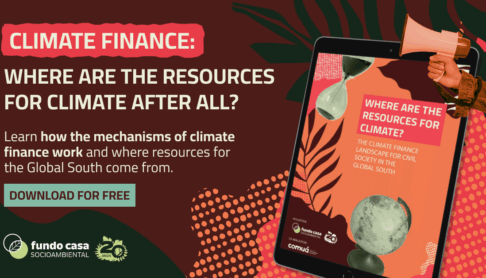
The publication “Where Are the Resources for Climate?” offers a critical and accessible perspective on global climate finance, highlighting how resources are distributed and the challenges of ensuring they reach communities in the Global South. The material explains the architecture of international agreements, outlines the main funds and access mechanisms, and proposes pathways toward a fairer and more democratic allocation of resources — strengthening civil society’s participation at COP 30 and in climate decision-making.
ACCESS HERE
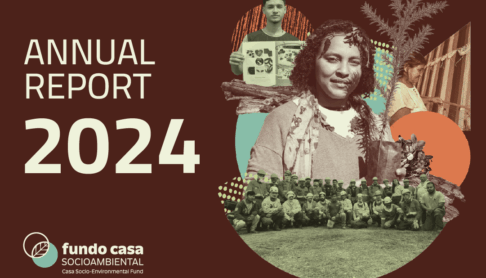
In 2024, Casa Socio-Environmental Fund allocated over U$ 5.8 million to support 535 projects and 42 environmental defenders across all regions of Brazil. Present in every biome, the funding prioritized Indigenous peoples, quilombola communities, riverine populations, and other traditional groups facing the impacts of the climate crisis. Highlights include the Sociobiodiversity Web call, with U$ 8 million expected by 2028, and an emergency response to floods in Rio Grande do Sul, which mobilized U$ 560,000. Community fire brigades also received over U$ 545,454 to combat wildfires across five biomes. The Fund’s work directly reached 1.9 million people and reaffirms its commitment to a direct, fair, and trust-based funding model. Strengthening local solutions remains a top priority amid the high demand for support.
VIEW PDF
The document highlights the role of Global South funds in the adaptation agenda and presents some networks and funds with participatory management that are already active in the climate agenda in the Global South and can serve as crucial financial mechanisms to increase local resilience.
VIEW PDF
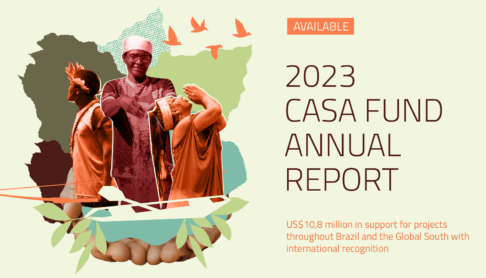
In 2023, the Casa Socio-Environmental Fund set new records by reaching a historic mark in grantmaking – over US$10,8 million distributed among 434 projects throughout Brazil and the world. The annual report reveals a significant increase in direct support to socio-environmental initiatives and the strengthening of partner funds in the Global South. These results reinforce the commitment to supporting local solutions based on nature and climate justice and consolidating its influence in the international philanthropy context.
VIEW PDF