 28.08.2026
When Art Helps Defend a Territory
As large-scale energy projects reshape territories, communities are turning to art to document what is changing, preserve what remains, and imagine other futures.
Some places remain part of a territory’s landscape even after they have changed profoundly.
In communities affected by large-scale energy projects, transformations do not happen only on the map. They reach into everyday life, alter relationships, and change how people recognize the place where they live. Yet some people find in creativity and art a way to respond to these changes.
Art can document what is disappearing. It can turn a difficult issue into a story a child can understand, create space for a community to speak for itself, and preserve knowledge that is not written in any document or report.
It is at this intersection of creativity and territorial defense that initiatives supported by Casa Socio-Environmental Fund and funded by the Mott Foundation are working.
For these projects, creating an image, telling a story, or organizing a cultural activity is not separate from environmental education. It is part of the awareness-building strategy itself.
Artistic language makes it possible to discuss environmental impacts through the experiences of those who live in the territory. Rather than explaining transformations only through numbers or technical terms, these groups seek other ways of perceiving them—some connected to memory and ancestral knowledge, others to photography, communication, and cultural production.
These are different ways of doing the same thing: looking at a territory before deciding what will be done with it. The three stories in this article begin from that perspective.
In Chapada Diamantina, Art and Culture Help Communities Defend Their Territories
In the community of Tiririca de Cima, in Ibitiara, Chapada Diamantina, a celebration passed down through generations has taken on new meaning amid the transformations brought by renewable energy projects.
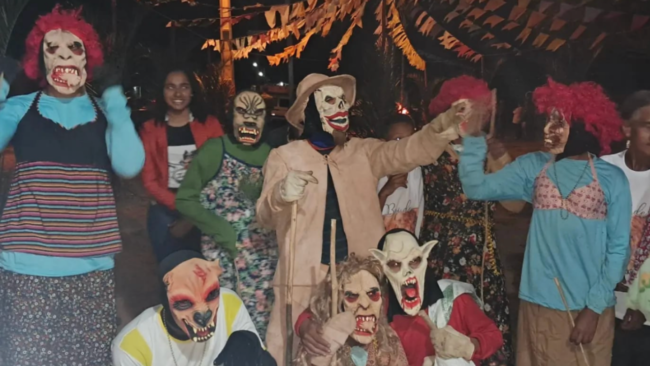
Boi de Marinhá, traditionally celebrated on June 13 for more than 200 years, is a cultural tradition that brings the community together through music, dance, and memory. When conflicts related to new projects began affecting the territory, preserving this gathering space also came to mean strengthening the bonds of a community under pressure.
Boi de Marinhá, a cultural tradition celebrated for more than 200 years by the community of Tiririca de Cima, in Ibitiara, Bahia, has also become a way to strengthen community ties amid conflicts caused by renewable energy projects. Photo: OCA Archive.
This is the territory where the Observatório dos Conflitos Socioambientais da Chapada (OCA) works. OCA leads the project A Guerra de Oyá – mulheres, comunicação e transição socioenergética no sertão baiano (The War of Oyá – Women, Communication, and Socio-Energy Transition in Bahia’s Backlands), which received a grant from Casa Fund.
The experience of Tiririca de Cima helps explain the project’s strategy: using art to create dialogue where conflict can generate fear, silence, and division. Four women community leaders took part in the initiative’s training program for community legal advocates. The community is also among the few in the area that managed to say no to a wind energy project and prevent it from moving forward.
“One of the greatest challenges we have identified is the difficulty of engaging with these communities, since the social fabric is already fragmented even before the projects arrive,” explains Gislene Moreira Gomes, the project coordinator.
For this reason, OCA does not treat culture as separate from mobilization. It is an entry point for discussing what is happening in the territory.
At a public hearing involving a British mining company, Gislene took the stage dressed as a representation of the British Crown. The performance drew on the colonial history of diamond exploitation in the area and prompted reflection on the relationship between past and present. The mobilization that followed led to formal complaints, the suspension of the mining company’s operations, and the opening of an international legal proceeding in the United Kingdom.
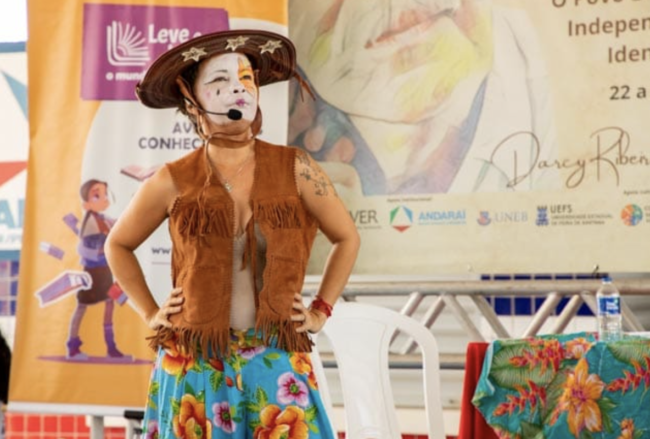
Gislene Moreira during a performance of Sertões Contemporâneos, which brings discussions about the transformations caused by new energy projects to schools and communities. Photo: OCA Archive.
The same approach appears in the performance Sertões Contemporâneos (Contemporary Backlands), which brings discussions about the impacts of new projects to schools and communities. The project has also produced books, podcasts, and a music video featuring women who took part in the training activities. These are different languages in the same struggle over narratives: those who tell the story of a territory also help shape how it is perceived and defended.
For Gislene, this may be art’s most important role in this process: “It has become an essential part of territorial defense, helping address the lack of information and ease tensions, especially in places where fear inhibits dialogue.”
In Chapada Diamantina, then, art is not simply a record of a culture that resists. It helps sustain the community that this culture brings together and creates space for women, youth, and communities to speak about the future.
In Altamira, Children Use Art to Rebuild Connections with the Amazon
In Altamira, Pará, the impacts of the construction of Belo Monte profoundly changed many families’ relationships with the river, the forest, and the territory itself. Children, adolescents, and young people who grew up in riverine communities began living in urban neighborhoods far from those environments, in a process that also weakened community ties and a sense of belonging.
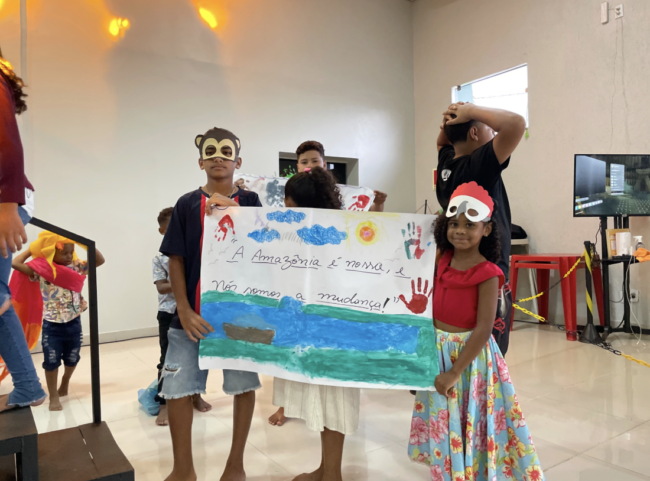
It was in this context that Instituto Lilar, in partnership with Coletivo de Mulheres do Xingu, developed Projeto Aldeias (Villages Project), which received a grant from Casa Fund. The initiative uses art, photography, music, mural painting, literature, and community activities to reconnect children and young people with nature, Amazonian culture, and the place where they live.
For Daniela Soares, the project coordinator, art emerged as a response to the impacts experienced by families. “Art emerged as a strategic tool for us because we understood and lived through all these impacts, which also caused people to become unwell. And we realized that culture and art are tools that spark and strengthen joy,” she says.
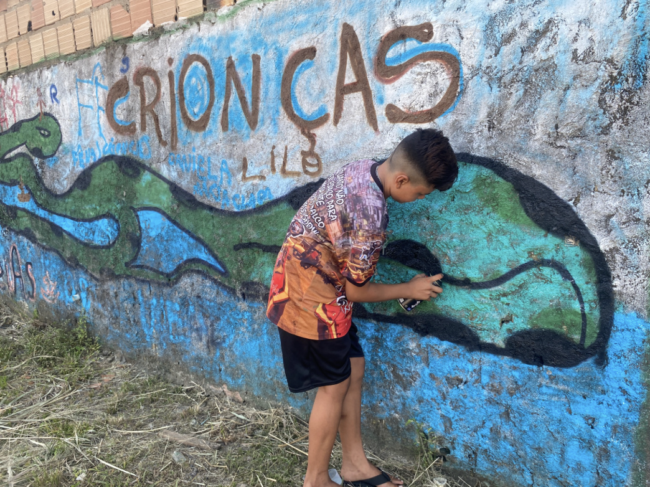
That joy, however, does not mean avoiding discussions about conflict. Music, theater, mural painting, photography, and storytelling help address issues such as deterritorialization, climate change, and the impacts of large-scale projects in ways that can reach more people.
For Daniela, “art has this ability to break through bubbles and connect with people through a song, a poem, or a story told through theater. It has the power to echo, to overflow, and to reach places and people that other forms of mobilization often cannot.”
In Aldeias workshops, around 40 children took part in mural painting, lettering, and environmental education activities. A photography workshop brought together 15 participants and led to the exhibition Amazônia como eu vejo (The Amazon as I See It), in which children and young people documented everyday life in their own community.
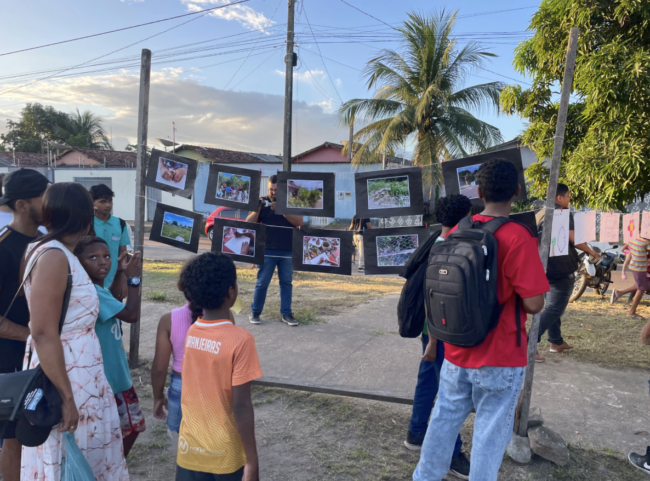
But the deepest transformation can be seen in the stories built over time. Neymar and Maria Antônia, two children who were there at the beginning of Aldeias, grew up alongside the project. Orphaned after losing their parents, they helped inspire the idea of a community care network for children, mothers, and the territory.
Today, Daniela sees both of them as examples of what it means to rebuild a sense of belonging. Neymar began to see himself differently in the territory where he lives. Maria Antônia began participating in decision-making spaces and even engaged with public authorities about Praça dos Sonhos, a public square envisioned around children’s own needs.
“One of the most important outcomes is seeing children and young people taking part in schools, community forums, and other spaces for participation, understanding their rights, and recognizing themselves as people capable of proposing solutions for the place where they live,” Daniela emphasizes.
For Projeto Aldeias, caring for children also means protecting the territory. For Daniela, it means ensuring children’s right to “play, dream, create, live their culture, build connections with the river, the forest, and their community, and grow up in a protected territory.” In Altamira, art helps rebuild these connections and imagine other futures for the Amazon.
Alto do Tororó, Bahia: When Art Also Defends the Territory
In Alto do Tororó, Salvador, Bahia, the Quilombola and fishing community has lived for decades with the impacts of industrial activity in Aratu Bay. Around 210 families depend on fishing and shellfish gathering as an important part of their way of life, which is now under pressure from projects linked to the oil and gas supply chain, as well as other industrial and military infrastructure.
It was in this territory that Associação de Mulheres Akomabu, in partnership with Assessoria Cirandas and with a grant from Casa Fund, developed the project Maré Baixa: Pescadores e Marisqueiras Quilombolas em Luta (Low Tide: Quilombola Fisherfolk and Shellfish Gatherers in Struggle). The initiative combined political education, social mapping, grassroots communication, and art to strengthen territorial defense.
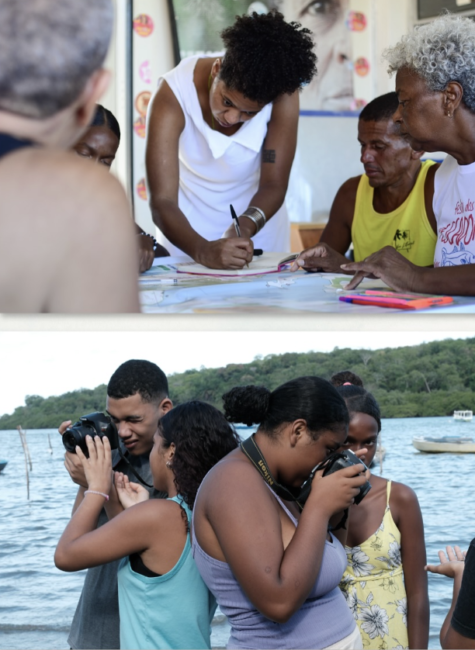
Art was not envisioned merely as a form of expression. It was incorporated into the project through a process developed with the women of the community themselves, who argued that communication about the Quilombo’s struggles should also emerge from their cultural traditions, memories, and forms of expression.
“Art thus began to democratize communication about the struggle and strengthen the community’s own leadership in producing and circulating its narratives,” explains Joelma Antunes, the project coordinator.
From this perspective, photographs, podcasts, celebrations, and other productions began documenting the changes observed in the mangrove, fishing, and shellfish gathering. Social mapping of the sea, built from residents’ own knowledge, also helped turn memories and uses of the territory into a tool for claiming rights.
But telling the story of the Quilombo does not mean speaking only about what is being lost. Art also helps people remember what remains.
“Art allows territorial defense to be communicated not only through pain, suffering, and denunciation. It also values joy, memory, food traditions, ancestry, cultural expressions, and the beauty of Quilombo Alto do Tororó,” Joelma says.
This dimension was especially evident in the revival of the Festa das Marisqueiras e dos Pescadores do Quilombo Alto do Tororó (Festival of the Shellfish Gatherers and Fisherfolk of Quilombo Alto do Tororó) after around 40 years. Led by women from the community, the mobilization revived a traditional celebration and also turned culture into a space for advocacy and visibility.
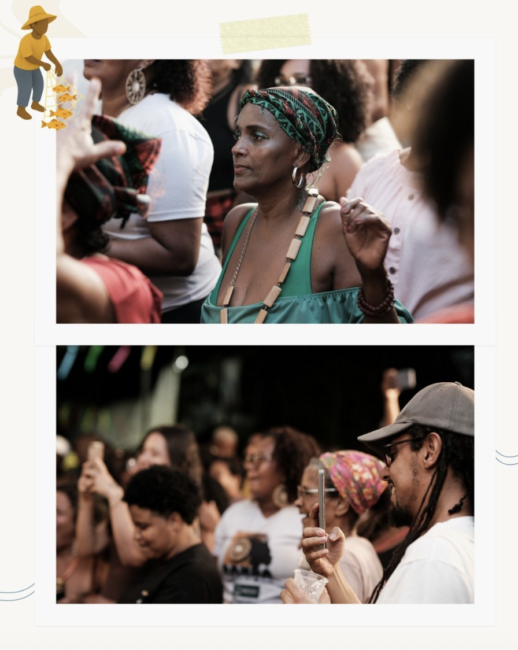
Another important outcome emerged among young people. Educommunication workshops brought a new generation closer to community organizing and gave rise to initiatives such as the photography exhibition Quando o Corpo Vira Paisagem (When the Body Becomes Landscape), the podcast Do Quilombo para o Mundo (From the Quilombo to the World), and the youth group Oriki Comunicações.
Communication thus ceased to be only a way of telling what happens in the territory. It also became a way of cultivating new voices to tell its story.
In Alto do Tororó, taking photographs, mapping, producing a podcast, or reviving a traditional festival are actions that meet in the same place: defending a living memory and the right to continue existing in the territory.