 07.04.2026
What remains: on legacy, choice, and the future we choose to sustain
There are gestures that do not belong only to the moment in which they occur. They travel across time.
This was the case when the Casa Socio-Environmental Fund received, for the first time in its history, a donation through an inheritance—a legacy left by Lucinda “Cindy” Buck Ewing (1941–2024), a photographer and philanthropist whose life was marked by a rare attentiveness to the world and a continuous commitment to care.
“There are moments when a gesture carries a quiet conviction, without needing to explain itself—something that reflects what a lifetime has stood for,” says Maria Amalia Souza, founder and Director of Global Philanthropy Strategies at the Casa Socio-Environmental Fund. It is a conscious choice about what should continue to exist.
Lucinda “Cindy” Buck Ewing traveled the world with an attentive gaze. From an early age, she found in photography a way to perceive what often goes unnoticed: light, texture, the details that reveal the depth of everyday life. In her own words, photographing was a way to “help the world—and ourselves—appreciate, in daily existence, what is often unseen.”
There is a deep coherence between this way of seeing and the way she chose to act. Throughout her life, she supported causes related to social equity in different parts of the world, with a consistent commitment to women-led initiatives. She made her life’s path a means of active and collective participation in building other possibilities for the way we live.
Her decision to allocate part of her legacy to Casa Fund is not an isolated gesture. It is continuity.
For more than two decades, Casa Fund has supported community-led initiatives across Brazil, especially those led by Indigenous Peoples, traditional communities, and grassroots organizations. In many of these contexts, women are on the front lines of protecting forests, waters, savannas, mangroves, and entire ways of life. They are the ones sustaining, every day, concrete responses to the climate crisis. And yet, they remain among the least supported.
“Our work has always been to ensure that these women are not left alone carrying the future,” says Amalia. “Knowing that Cindy chose to join this effort, even after her passing, shows that this path is also shared.”
In a world marked by extreme levels of wealth concentration, decisions like this help bring back an essential question: what do we ultimately do with what we accumulate over a lifetime?
Cindy’s answer was unequivocal: her resources begin to transform into continuity, her wealth into presence, and her legacy takes on concrete form in the hands of women who care for life, defend their territories, and build solutions every day.
This gesture also opens a possibility—not as an exception, but as an example. A quiet yet urgent invitation for more people to reconsider the destination of their resources, during their lifetime or beyond it, and to recognize the power of directing them to where knowledge, action, and transformation are already underway.
The Casa Socio-Environmental Fund receives this legacy with gratitude, but above all, with responsibility.
Because there are gestures that do not end when they happen. They continue in what they come to sustain. And perhaps this is one of the deepest ways of remaining.
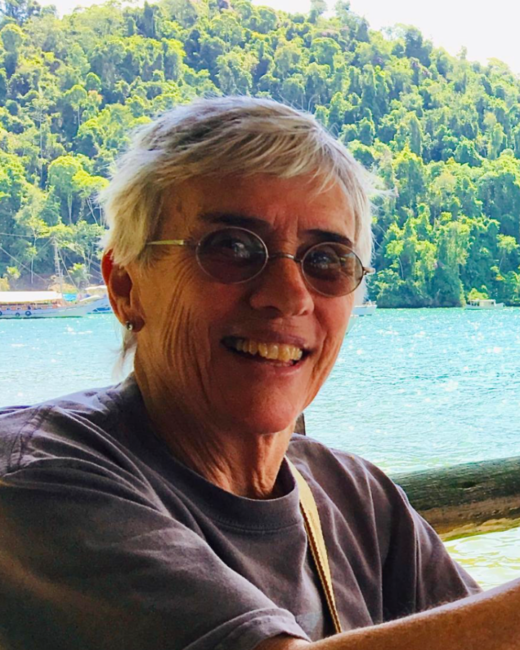
Cindy visiting Maria Amalia in Brazil, in November 2016, when she experienced the Atlantic Forest and the Amazon and was able to closely understand Casa Fund’s work to protect these places and their peoples. Photo: personal archive