 16.04.2026
When the territory becomes a school: building Quilombola education in Cachoeira, Bahia
A project supported by the Casa Socio-Environmental Fund strengthens the collective construction of Quilombola education in communities across the Recôncavo region of Bahia
In the district of Santiago do Iguape, a rural area of Cachoeira, in the Recôncavo region of Bahia, amid mangroves and the inlets of Iguape Bay, at the estuary of the Paraguaçu River, learning begins with the rhythm of the tides. It moves through the work of those who rely on artisanal fishing and shellfish gathering, in the samba circles that span generations, and in the stories that remain alive in the memories of the community’s elders. There, learning also means listening—listening to the territory, its rhythms, and its knowledge, which circulate among Quilombola families in the region.
It is in this setting, shaped by a deep relationship with water and land, that Quilombola communities in Cachoeira continue to strengthen their own path for education—one that recognizes and values the history, culture, and ways of life of the territories in which it is rooted. This is the path guiding the project “(Re)Developing the PPP: Weaving Threads and Pathways in Quilombola Schools,” carried out by Instituto Mãe Lalu with support from the Casa Socio-Environmental Fund and funding from Imaginable Futures.
The initiative aims to strengthen the development of the Political-Pedagogical Project (PPP) of Quilombola schools within the municipal education system, placing the knowledge and lived experiences of the communities themselves at the center of the process. The PPP defines the foundations of how each school operates: how teaching happens, what is taught, and which values guide the educational process. In the case of Quilombola schools in Cachoeira, Bahia, the proposal is for this document to be built collectively and to reflect the realities and identities of the territories where these schools are located.
For Oracy Suzarte, Pedagogical Director of Instituto Mãe Lalu, the PPP must be understood as a living instrument, connected to the realities of the communities. “Rather than a rigid and inflexible manual, it serves as a guiding framework for what is done in and through the school. We see it as a real document—a guide that shapes the school’s actions, teaching, and learning, placing at the center an education that recognizes and values Quilombola histories, knowledge, and practices,” Oracy emphasizes.
The work takes place in the district of Santiago do Iguape, a Quilombola community located just over 100 kilometers from Salvador. The region is part of the Iguape Basin and maintains a strong relationship with the sea and mangroves, from which many families derive their primary source of livelihood. Artisanal fishing and shellfish gathering remain central to the local economy and to community life. At the same time, Quilombola culture remains vibrant in the cultural expressions that shape everyday life—from samba de roda to capoeira, from traditional festivities to religious celebrations.
Yet despite this rich cultural landscape, schools do not always succeed in incorporating this knowledge into the educational process. In many cases, school curricula continue to follow models disconnected from the realities of these communities, creating a gap between what is taught in the classroom and what is part of students’ daily lives.
It is precisely this gap that the project seeks to address. The initiative proposes a capacity-building process with the management teams of Quilombola schools in the municipality, engaging principals, pedagogical coordinators, and educators in training cycles focused on the collective construction of the PPP.
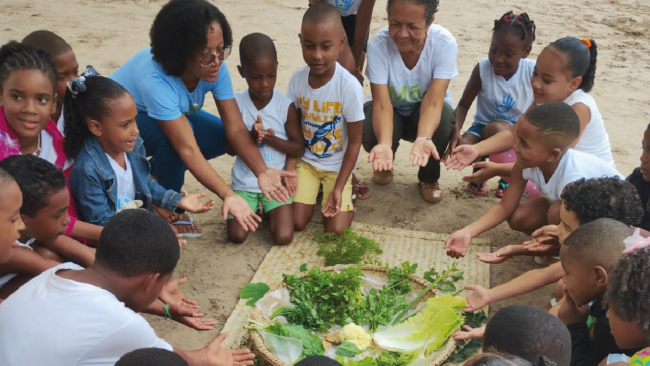
To support this, Instituto Mãe Lalu employs its own methodology, known as the Ciranda Pedagogy. Inspired by traditional circle gatherings that are part of community life, this approach values dialogue, orality, and the collective construction of knowledge. In these training sessions, teachers, school leaders, and community representatives come together in circles to share experiences, discuss challenges, and build pathways for Quilombola education.
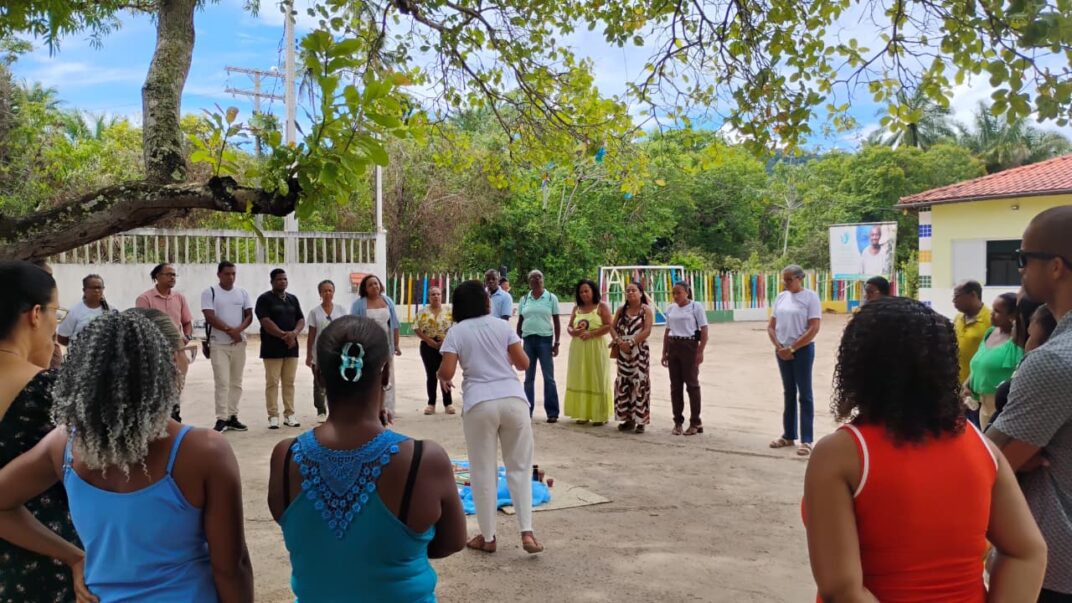
The circle serves as both a starting point and a place of return: first, to listen and share ideas; then, to collectively reflect on educational practices; and finally, to turn these reflections into concrete proposals for the schools. Support from the Casa Socio-Environmental Fund has been a key element in making this process possible.
“The support from the Casa Socio-Environmental Fund has been essential to advancing the training process of school teams focused on the (re)development of the PPP in Quilombola schools within the municipal network of Cachoeira. The Institute has been strengthening itself as an institution, both in its visibility and in its methodology, which is being adapted to respond to different realities.” — Oracy Suzarte, Pedagogical Director of Instituto Mãe Lalu
Throughout the project, guidance materials are being developed to support school teams in the process of drafting new PPPs. These materials help integrate different dimensions of knowledge, bringing formal education closer to the traditional knowledge present in Quilombola communities.
In motion, the experience of Quilombola schools is already sowing transformations in public education, affirming Quilombola knowledge and identities as living, present, and structuring elements of educational policies. Strengthening Quilombola education also means valuing the knowledge accumulated by communities over generations—knowledge that helps understand the environment, care for natural resources, and preserve cultural practices that are part of local identity.
For the communities of Santiago do Iguape and other Quilombola territories in Cachoeira, building an education connected to the territory is also a way of ensuring that future generations come to know and value their own histories. Because there, learning means recognizing the roots that sustain the present and help build possible futures.